

Energy · Industrial AI
PPI
Predictive Pipeline Integrity: an IoT and AI platform for proactive pipeline maintenance. Real-time sensor streams, anomaly detection with explainable-AI overlays, defect engineering calculations (B31G, RSTRENG, DNV), risk assessment, and cathodic protection monitoring behind an operator dashboard.
The problem
Pipeline operators need to find integrity problems before they become incidents. Sensor data, inspection results, and engineering calculations usually live in separate systems, so risk is assessed late and by hand.
What we built
- 01Real-time ingestion of pressure, flow, temperature, acoustic, and corrosion sensors
- 02Anomaly detection with explainable-AI overlays
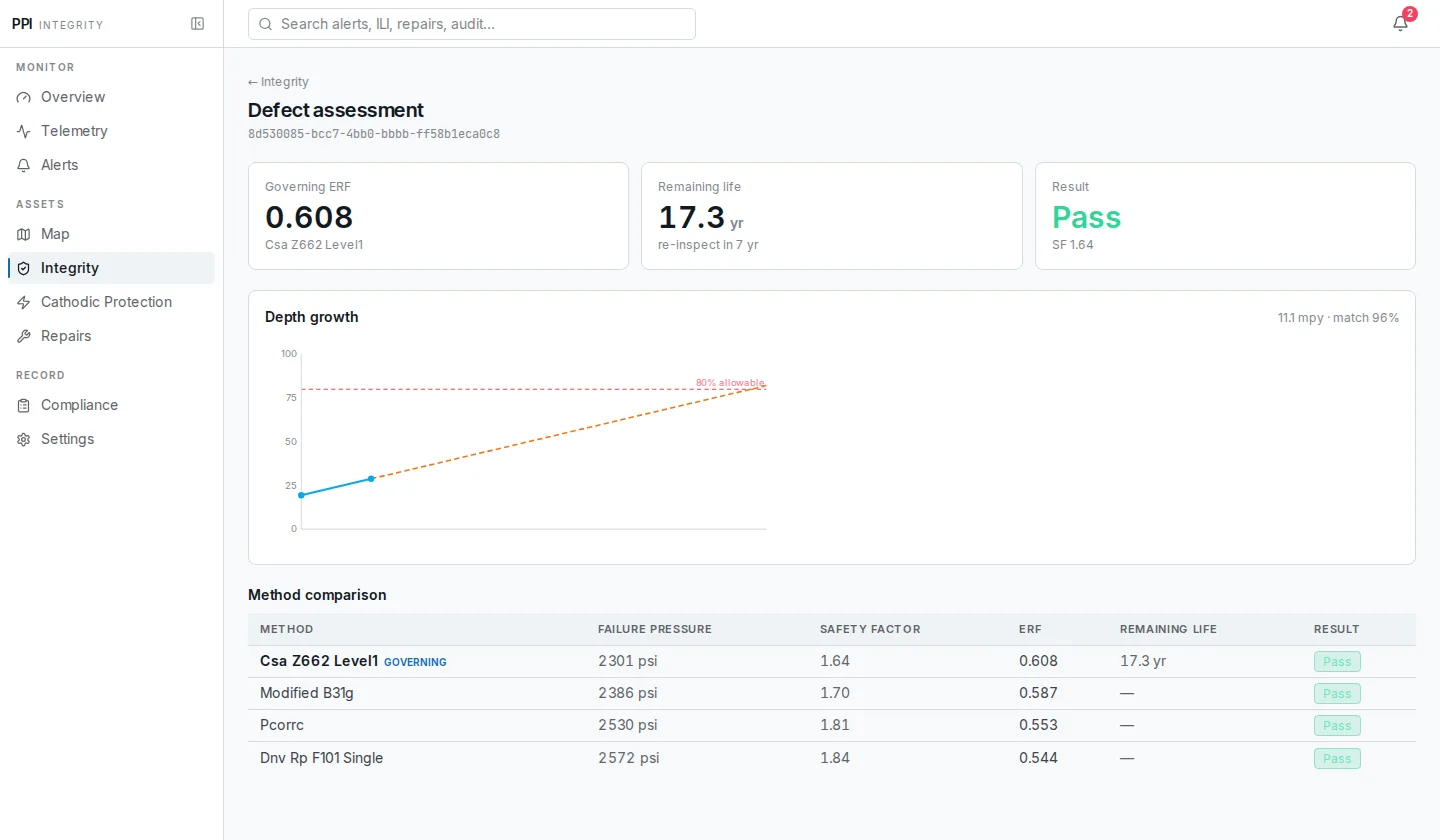
- 03Defect assessment using B31G, RSTRENG, CSA Z662, and DNV methods
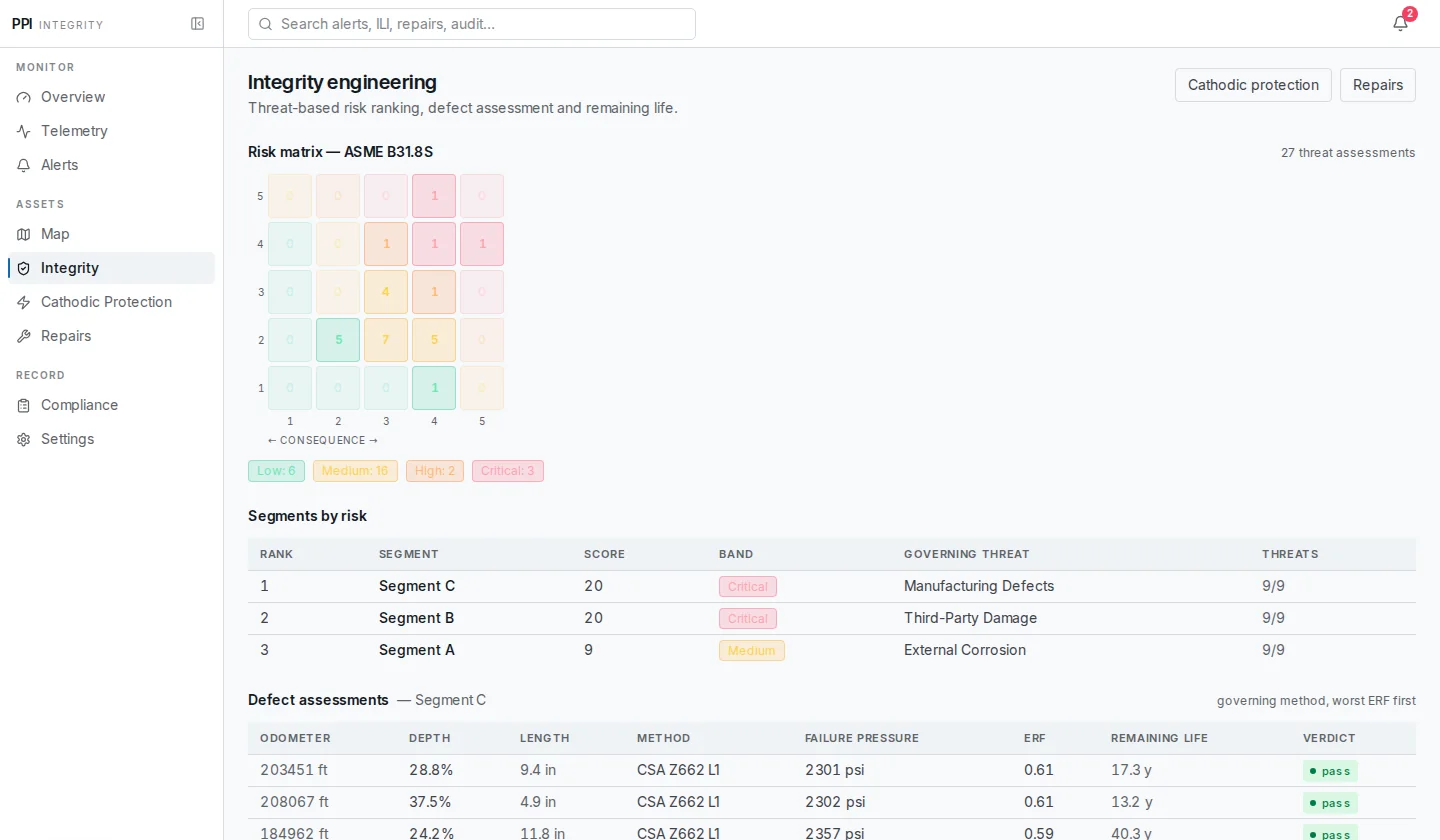
- 04Risk matrix, cathodic protection compliance, and repair tracking
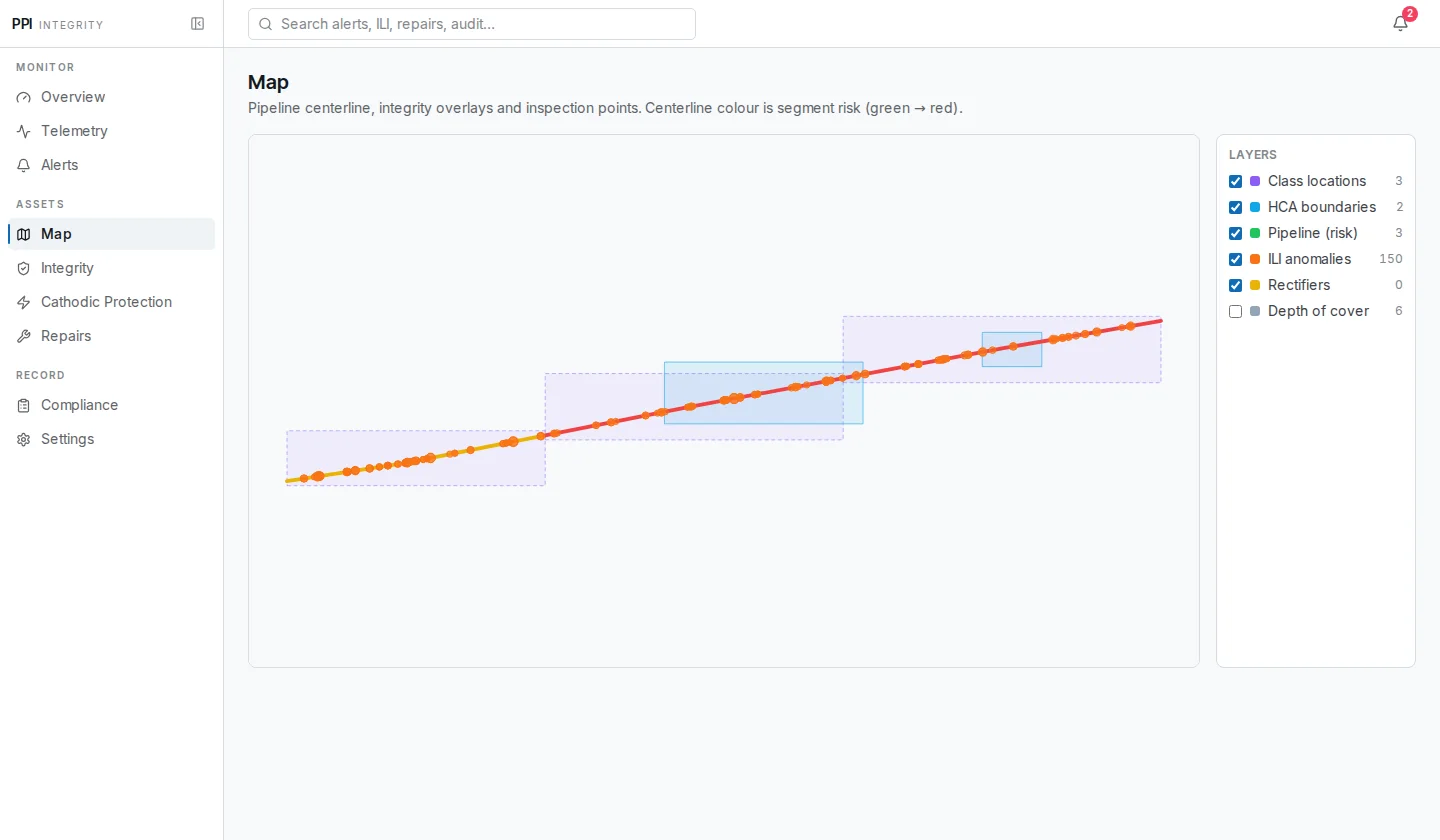
- 05Map view, KPIs, compliance records, and management of change
Engineering decisions
Safety maths in one place
Integrity calculations live only in the Python engine; the web API calls it, so results cannot drift between languages.
Streams with recovery
Sensor data flows through Redis Streams with consumer groups and a dead-letter queue into TimescaleDB.
Explainable by default
Anomaly scores carry feature attributions, so engineers see why a segment was flagged.
Need a system like PPI?
Tell us what you need to build or improve, your timeline, and how you will measure success. We reply with clear next steps.